
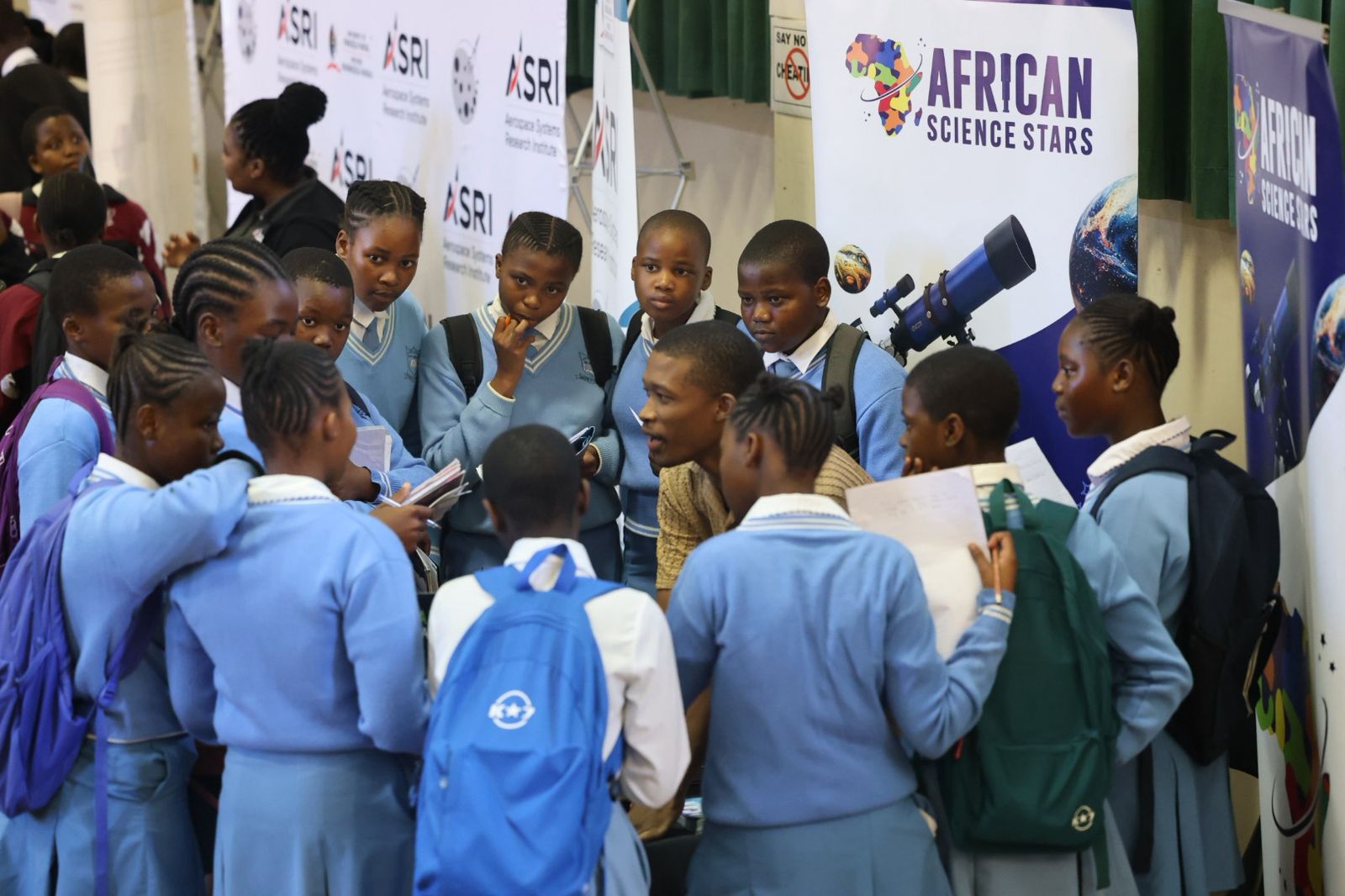
More than 5 000 learners from over 50 schools across KwaZulu-Natal’s Harry Gwala District were inspired through science, technology and innovation during the successful hosting of the 6th Annual Harry Gwala District Science Festival from 04–08 May 2026.
Hosted in partnership with the South African National Space Agency (SANSA), the festival has grown into one of KwaZulu-Natal’s most impactful rural Science, Technology, Engineering, Mathematics and Innovation (STEMI) outreach programmes, bringing science, technology and innovation directly to communities where opportunities are often limited.
Held across Kokstad, Umzimkhulu, Bulwer, Ixopo and surrounding circuits, the week-long programme brought together learners, educators, scientists, engineers, higher education institutions, government departments and innovation organisations under the 2026 theme: “From Knowledge to Action: Using STEMI to Build Sustainable and Climate Resilient Communities.”
During the week-long programme, learners engaged with interactive demonstrations and exhibitions covering robotics, satellite technology, renewable energy, astronomy, biodiversity and nuclear science.
For many learners, it was their first opportunity to interact directly with scientists and professionals working in advanced STEMI fields.
Speaking on the significance of the festival , Loyiso Bavuma, Senior Education Specialist at the Harry Gwala District Department of Education, who founded the Harry Gwala District Science Festival in 2021.
“The primary objective of the festival was to expose learners, particularly those from disadvantaged communities, to the wide range of opportunities and careers available within the STEMI sector,” Bavuma said.
“Through exhibitions, practical demonstrations, motivational engagements and career guidance sessions, learners were encouraged to pursue academic excellence and consider careers that contribute meaningfully to the advancement of society and the economy.”
He added that the partnerships formed through the programme are helping create opportunities for learners who often have limited access to quality science resources.
“The Harry Gwala District extends its heartfelt appreciation to SANSA, all participating science organisations, institutions of higher learning, health professionals and stakeholders for their invaluable contribution towards the success of the festival. Their commitment, expertise, resources and willingness to engage with learners played a significant role in inspiring hope and broadening the horizons of many young people within the district,” he added.
Many schools within the Harry Gwala District continue to face challenges such as limited laboratory facilities, poor internet connectivity and shortages of modern science equipment.
The Science Festival continues to bridge that gap by bringing world-class STEMI exhibitions and career guidance directly into rural communities.
Since its launch in 2021, the programme has experienced remarkable growth. What began as an initiative reaching 1 172 learners from 23 schools has expanded into a district-wide programme that has cumulatively impacted more than 9 262 learners over six editions.
The 2026 festival also expanded into new areas, with the Mt Currie and Samaria Circuits joining returning centres in Kokstad, Mzimkhulu, Ixopo and Pholela.
A major highlight of the festival was the return of the Grade 12 STEMI competition, first introduced in 2025.
This year’s competition featured expanded prizes and themes focused on climate adaptation, disaster preparedness and sustainable economic development, encouraging learners to apply scientific thinking to real challenges facing their communities.
KwaZulu-Natal’s impressive 90.60% matric pass rate in the 2025 cohort reflects, in part, the growing investment in quality STEMI education and learner support programmes across the province.
As the festival concluded, organisers reaffirmed their commitment to expanding access to science and innovation opportunities for rural communities.
African Science Stars was in attendance as part of its broader mission to advance public awareness, appreciation and engagement in STEM, space science and astronomy across the African continent.