
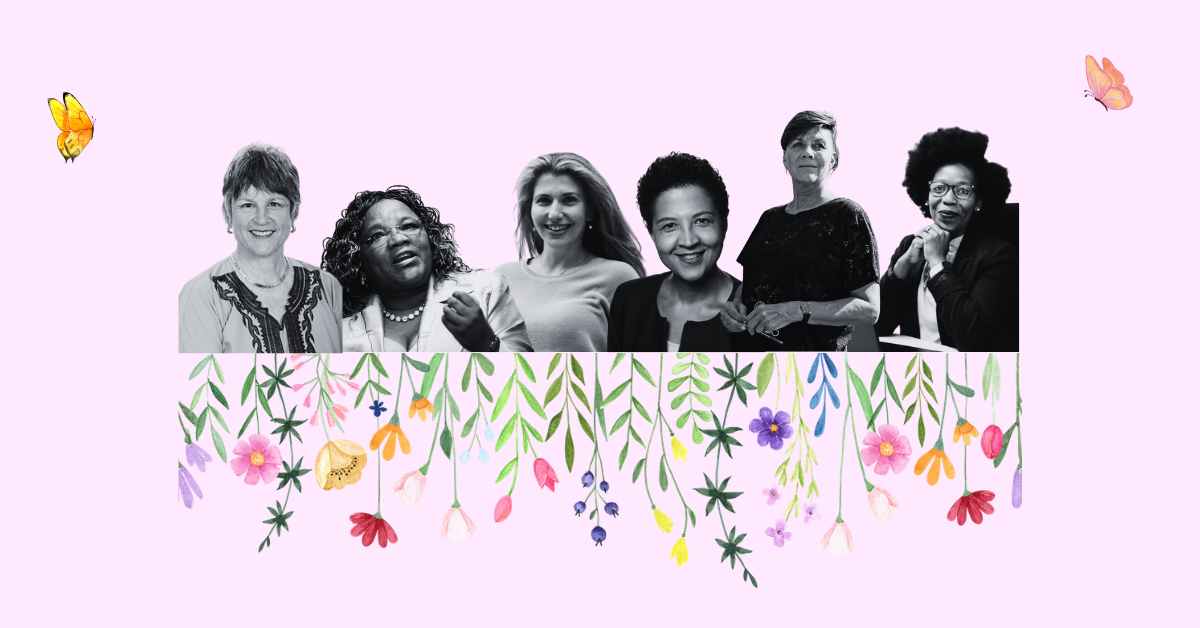
What do drought-resistant crops, cancer research, artificial intelligence in healthcare, black holes and African hair have in common? They are all connected to the work of South African women in STEM.
STEM – Science, Technology, Engineering and Mathematics, plays an important role in solving some of the challenges facing our country and our planet. From understanding how plants survive extreme drought to developing technologies for healthcare and investigating the mysteries of the Universe, South African researchers are contributing to science both locally and internationally.
This Women’s Month, Science Stars is highlighting six remarkable South African women whose research, innovation and dedication are helping push STEM forward. Their fields may be different, but their stories share something important: they saw questions worth answering and dedicated their careers to finding solutions.
Prof Jill Farrant (Plant Biology & Food Security)
Imagine a plant that can lose almost all of its water, appear completely dried out and then come back to life when it rains. These extraordinary plants are known as resurrection plants, and studying them has been a major focus of Professor Jill Farrant’s career at the University of Cape Town.
Southern African resurrection plants can survive extreme water loss and, when water becomes available again, recover their normal biological functions. Farrant’s research investigates the molecular and metabolic mechanisms that allow them to survive such harsh conditions.
But why study these unusual plants? Because understanding how they survive drought could help scientists develop crops that are more tolerant of water shortages. This is particularly important as climate change increases pressure on agriculture and food security in South Africa and across Africa
Farrant’s research has helped establish South Africa as a leading centre for research into plant desiccation tolerance and stress resilience. Farrant is showing us that sometimes the answers to huge global problems can be found in the remarkable biology already growing around us.
Prof Jennifer Thomson (Genetics & Agricultural Biotechnology)
Food security is one of the biggest challenges facing Africa, and Professor Jennifer Thomson has spent much of her career investigating how biotechnology can help. Thomson’s research includes developing genetically modified maize that is more tolerant of drought and other environmental stresses. Her work with colleagues has also explored maize resistant to Maize streak virus, an important African crop disease
One particularly interesting part of this work involves genes from the resurrection plant Xerophyta viscosa, which can tolerate extreme dehydration. Researchers have investigated whether the mechanisms that allow this plant to survive drought could help improve crop resilience.
Thomson has also played an important role in South African biotechnology beyond the laboratory. She helped draft South Africa’s National Biotechnology Strategy and co-founded SA WISE, an organisation supporting women in science and engineering. Thomson’s work shows how genetics and biotechnology can be used to tackle very real challenges, including how we grow enough food in a changing climate.
Prof Tebello Nyokong (Chemistry & Nanotechnology)
Professor Tebello Nyokong is one of South Africa’s most internationally recognised scientists, with research spanning chemistry, nanotechnology, sensors and cancer-related technologies. One area of her research is photodynamic therapy, which explores how light-activated compounds can be used in cancer treatment. Her work also investigates nanomaterials and sensors for applications including detecting pollutants and neurotransmitters.
Her research demonstrates how chemistry can extend far beyond the laboratory bench. By combining chemistry with nanotechnology and other disciplines, scientists can develop new approaches to problems in medicine, environmental monitoring and technology.
Nyokong has also become an important role model for young scientists in South Africa, particularly women entering fields where they have historically been underrepresented. Nyokong reminds us that chemistry is everywhere, from the molecules inside our bodies to the technologies we use to understand and improve the world around us.
Prof Amanda Weltman (Physics & Cosmology)
Some scientists study the world around us. Others look far beyond it. Professor Amanda Weltman is a theoretical physicist at the University of Cape Town whose research focuses on cosmology, astrophysics, gravity and fundamental physics.Her work includes research into alternative theories of gravity and the mysterious components of our Universe, including dark energy. She is particularly known for her work on chameleon gravity, a theory she developed during her PhD.
Weltman has also helped build South Africa’s research capacity in theoretical physics. She founded UCT’s High Energy Physics, Cosmology & Astrophysics Theory Group, creating a hub for research and training the next generation of scientists. She became the first woman in the mathematical or physical sciences to hold a South African Research Chairs Initiative (SARChI) Chair when she was awarded the Physical Cosmology chair.
Weltman’s work shows that South African scientists can contribute to some of humanity’s biggest questions: How did the Universe begin? What is it made of? How does gravity work? And what might its future look like?
Prof Tania Douglas (Biomedical Engineering)
What happens when you combine medicine, engineering, mathematics and technology? You get biomedical engineering, a field that uses engineering principles to help solve problems in healthcare.
Professor Tania Douglas was a pioneer of biomedical engineering in South Africa. She was the inaugural South African Research Chair in Biomedical Engineering and Innovation and founded the Biomedical Engineering Research Centre at UCT.Her work focused strongly on creating solutions that were relevant to African healthcare. She advocated for Africa to develop its own medical technologies rather than relying entirely on imported equipment that may not be designed for local conditions.
Douglas also helped build biomedical engineering capacity across Africa and played a role in establishing the African Biomedical Consortium. Although Professor Douglas passed away in 2021, her work continues through the researchers, students and technologies that have grown from the foundations she helped establish.
Douglas showed that engineering isn’t just about machines and buildings. It can also be about creating better healthcare and designing solutions specifically for the communities that need them.
Prof Nonhlanhla Khumalo (Medical Research & Dermatology)
Science doesn’t always begin with something completely unknown. Sometimes it begins by asking why certain problems have not been studied enough. Professor Nonhlanhla Khumalo is a dermatologist and researcher who has worked to expand scientific knowledge around African hair and skin.
She founded the Hair and Skin Research Laboratory at Groote Schuur Hospital, a state-of-the-art research facility created to strengthen laboratory research into hair and skin conditions in South Africa. Her research has included African hair disorders, traction alopecia, skin conditions and the effects of hair and cosmetic products. Her team has also investigated the molecular characteristics of hair in South African populations.
Khumalo’s work has helped address a gap in research into conditions that disproportionately affect people of African ancestry. Her research programme also investigates neglected conditions such as keloid scarring and wound healing. Khumalo shows us why representation in science matters. When scientists ask questions about communities that have historically been overlooked, they can uncover knowledge that improves healthcare and changes the way we understand our own bodies.
From plants that can survive extreme drought to the mysteries of the Universe, these six women demonstrate just how diverse STEM can be. Jill Farrant is helping us understand how plants survive drought. Jennifer Thomson is exploring how biotechnology can help protect our food supply. Tebello Nyokong is pushing the boundaries of chemistry and nanotechnology. Amanda Weltman is investigating the fundamental laws of our Universe. Tania Douglas helped build a new generation of biomedical engineering in Africa. Nonhlanhla Khumalo is expanding research into African hair, skin and health. Their work reminds us that being a scientist isn’t about knowing all the answers. It’s about being curious enough to ask the questions.